
There’s a particular kind of confidence you feel standing on Sheikh Zayed Road at dusk, watching cranes
silhouette against a skyline that seems to add a new landmark every few months. That confidence isn’t
accidental. It’s engineered — city planners, sovereign developers, and a government willing to bet billions on
infrastructure a decade before demand catches up. If you’re an investor scanning for the next high-growth
market, a student weighing where to build a career, or simply someone curious about buying property abroad,
the next six years in Dubai are worth paying close attention to. Not because the city is promising the future —
but because it’s already pouring concrete for it.
A City Building Two Master Plans at Once
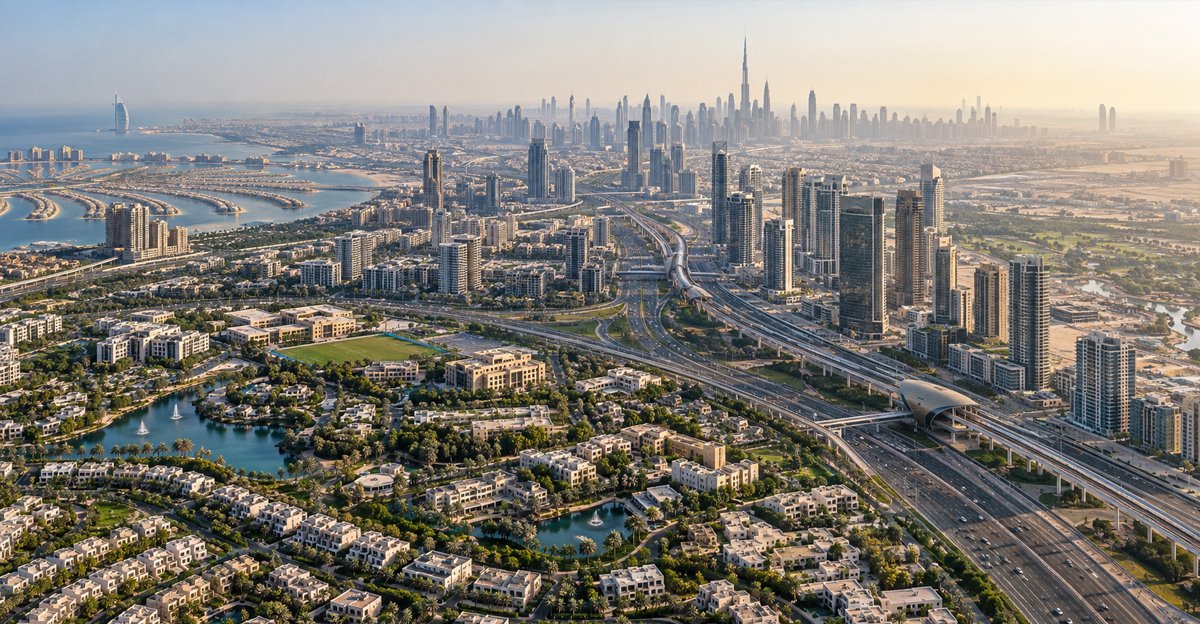
Most cities pick one long-term vision and hope to execute it. Dubai is running two simultaneously. The Dubai
2040 Urban Master Plan governs land use, population distribution, and the “20-minute city” concept — the idea
that every resident should be able to reach essential services within a short commute, regardless of which district
they live in. Layered on top of that is the Dubai Economic Agenda D33, a plan explicitly designed to double
the size of Dubai’s economy by 2033 and cement the emirate among the world’s top four global cities.
What makes this pairing significant for property buyers is simple: master-planned growth tends to protect asset
values better than organic, unplanned sprawl. When a government commits to transport corridors, utility
capacity, and zoning years in advance, early buyers in those corridors are effectively front-running
The Projects Reshaping the Map
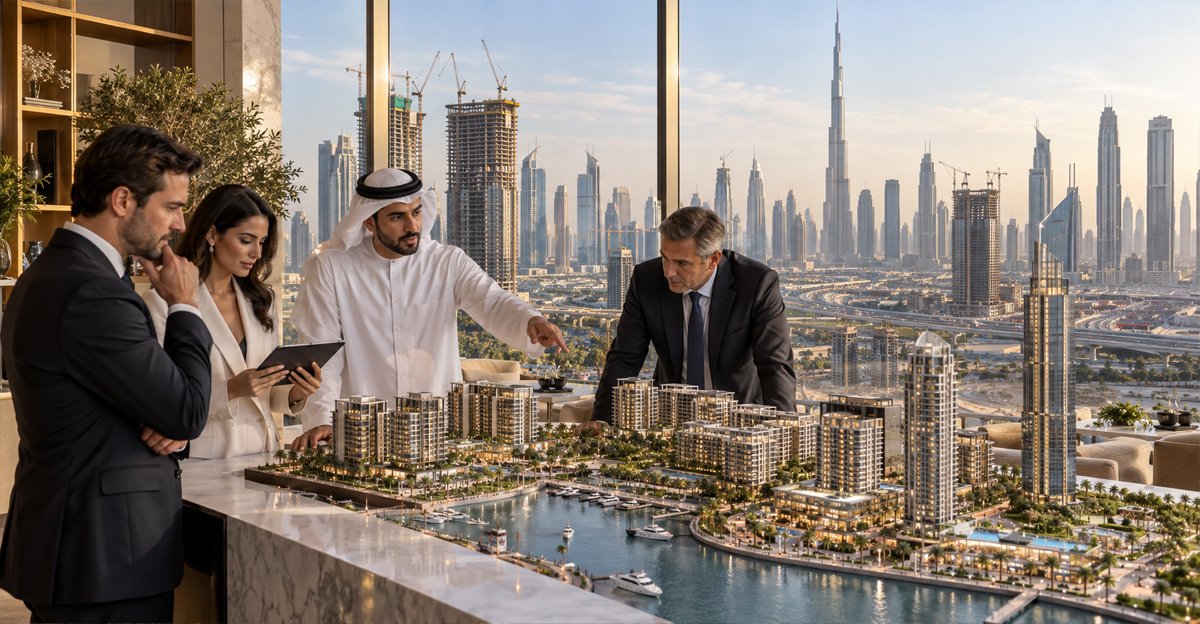
A handful of developments define what the next six years will actually look like on the ground.
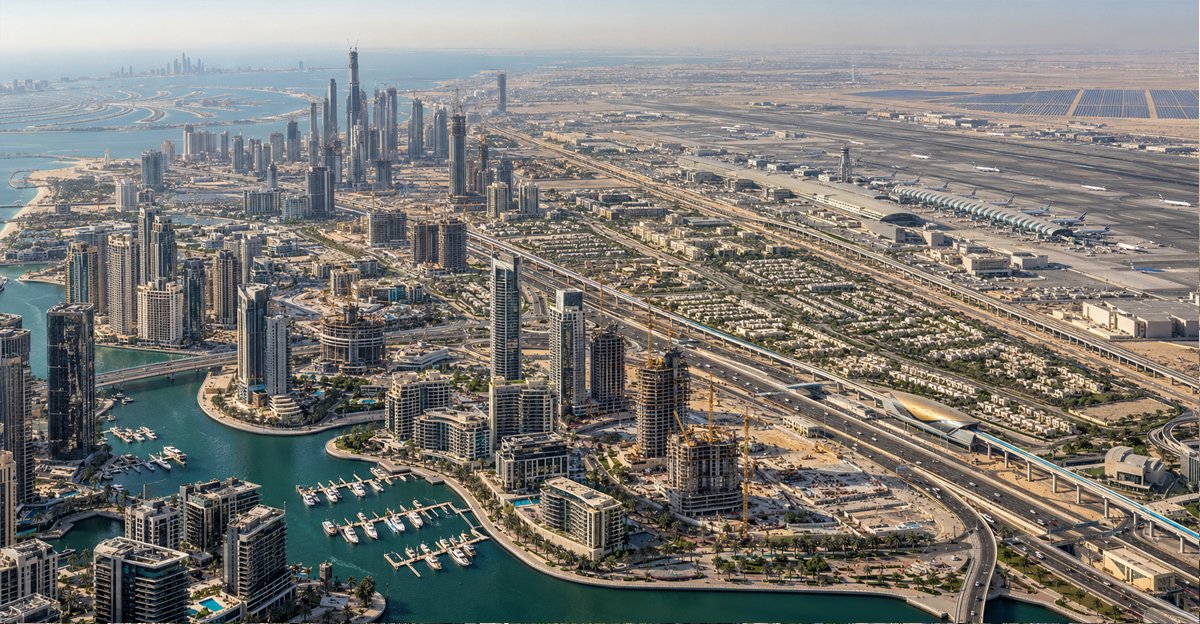
Al Maktoum International Airport (Dubai South) is arguably the single biggest bet the emirate has placed on its own future. The expansion, valued at roughly USD 36 billion, is designed to eventually process more passengers annually than any airport on earth, alongside a major cargo hub. As construction phases progress toward 2030, the surrounding Dubai South district — already home to Expo City — is positioning itself as the next major residential and logistics corridor, with entry-level pricing that’s still meaningfully below established areas like Downtown or Marina.
Al Maktoum International Airport (Dubai South) is arguably the single biggest bet the emirate has placed on its own future. The expansion, valued at roughly USD 36 billion, is designed to eventually process more passengers annually than any airport on earth, alongside a major cargo hub. As construction phases progress toward 2030, the surrounding Dubai South district — already home to Expo City — is positioning itself as the next major residential and logistics corridor, with entry-level pricing that’s still meaningfully below established areas like Downtown or Marina.
Palm Jebel Ali is the long-dormant sister project to the original Palm Jumeirah, now back under active
development with a scale several times larger than its predecessor. For investors who watched the first Palm
turn from a speculative punt into one of the most recognizable pieces of real estate on the planet, Jebel Ali
represents a second entry point at an earlier stage of the cycle.
Dubai Creek Harbour, Emaar’s waterfront mega-development near the historic Creek, continues rolling out
residential towers across a footprint of roughly 500,000 square metres of open space, with over 7 million square
metres allocated to residential use. It’s designed to eventually rival Downtown Dubai in scale, but with a
waterside, low-density character that appeals to end-users as much as investors.
Then there’s the skyline race itself. Burj Azizi, a 131-plus storey tower on Sheikh Zayed Road, is set to become
the second-tallest building in Dubai, complete with a planned seven-star hotel and a beach club roughly sixteen
floors up. Burj Binghatti, developed with Jacob & Co., is aiming to become the world’s tallest residential tower
at over 550 metres in Business Bay. Branded residences of this kind have historically commanded stronger
resale premiums than comparable unbranded stock — a pattern international buyers have taken note of.
On the infrastructure side, the Dubai Metro Blue Line and continued phases of the RTA’s transit network,
alongside the Mohammed bin Rashid Al Maktoum Solar Park — targeting 5,000 megawatts by 2030 and
already the largest single-site solar installation on the planet — reflect a city investing as much in the invisible
backbone of daily life as in its headline towers. Even more ambitious environmental undertakings like Dubai
Reefs signal that growth here isn’t being pursued at the expense of long-term sustainability planning, but
alongside it.
Why This Matters for Three Very Different Kinds of Reader
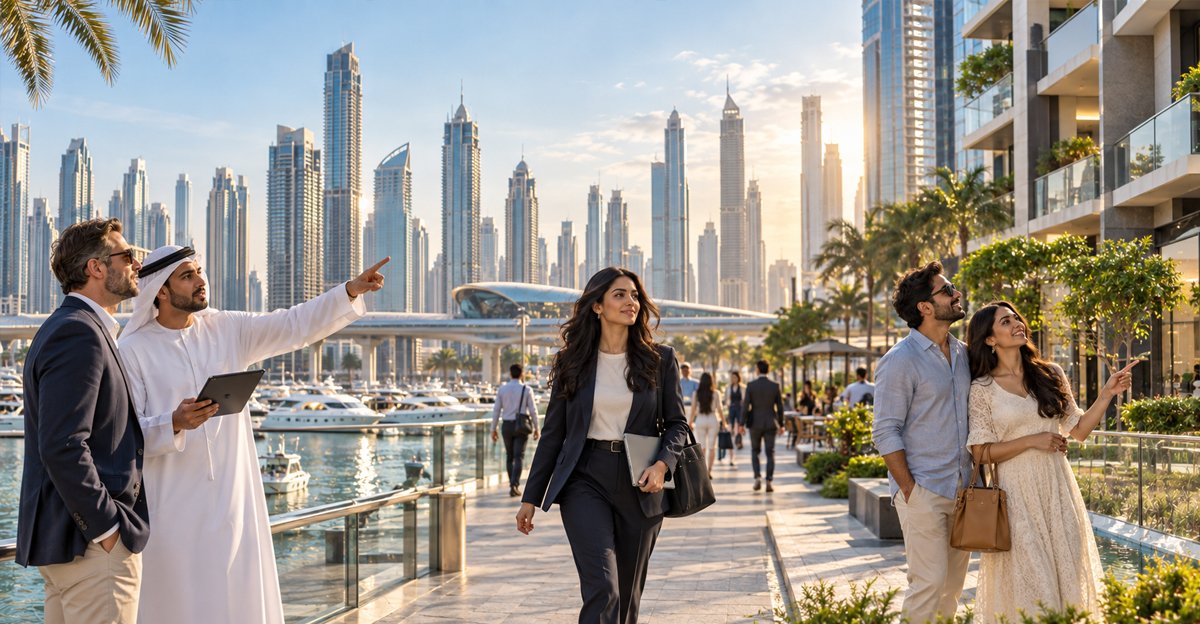
If you’re an investor, the pattern across every one of these projects is the same: the earliest capital into a
master-planned corridor — Dubai South today, the way JLT or Downtown was fifteen years ago — tends to
capture the steepest part of the appreciation curve, provided the developer and location are backed by credible
government infrastructure commitments rather than marketing alone.
If you’re a student or young professional weighing where to build a career, it’s worth noticing that D33’s
ambitions aren’t just about towers — they’re about doubling foreign trade, strengthening Dubai’s position as a
global logistics and financial hub, and creating the kind of economy that needs a much larger, more diverse
workforce than it has today. Six years from now, the city planning that workforce’s commute is the same city
planning its skyline.
And if you’re simply someone curious about buying a home or a second property, the practical takeaway
is this: Dubai’s freehold market has matured considerably since its early 2000s boom-and-bust years. Regulatory
oversight from the Dubai Land Department, escrow protections for off-plan buyers, and the long-term visibility
offered by residency options like the Golden Visa have collectively made the market far less speculative — and
far more transparent — than it was a decade ago.
The Six-Year Bet
None of this guarantees returns — no market does, and anyone advising otherwise isn’t being straight with you.
Off-plan pricing shifts, handover dates slip, and global capital flows can turn quickly. But what’s harder to argue
with is the sheer coordination on display: an airport built for a city three times its current size, a metro line
extending to meet it, a solar park quietly powering it all, and a skyline racing to define it visually. Dubai isn’t
hoping the next six years go well. It’s building as if they already have.
Curious how a specific project, community, or investment strategy fits your goals? That’s a conversation worth
having before the next phase of pricing kicks in.